Reader Q&A: Should You Keep Your Savings in Naira or US Dollars?
By Victoria Odunola —
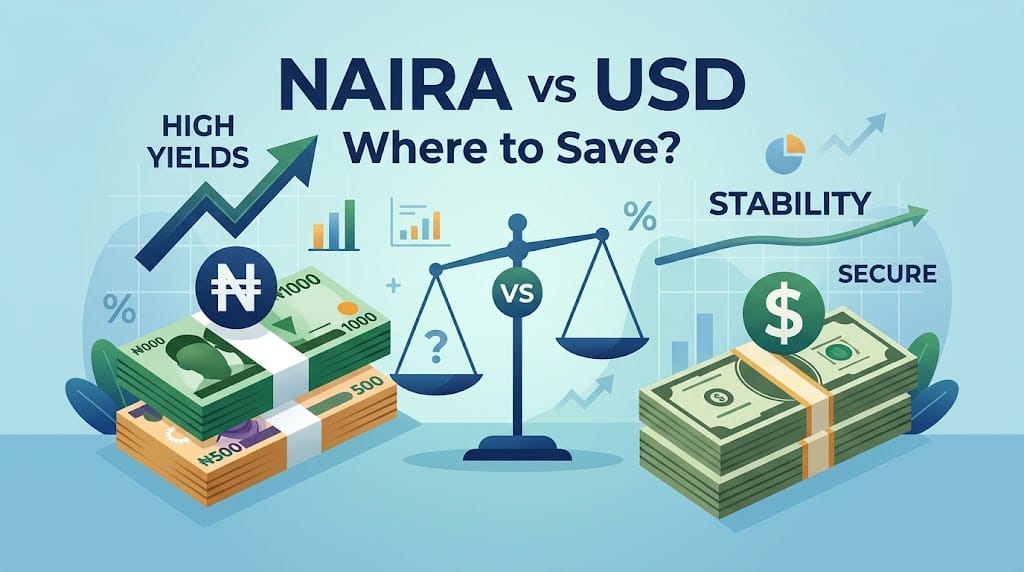
A reader based in Lagos writes: "I earn in naira, but watching inflation and exchange rate swings over the past few years has left me anxious. Should I convert my cash reserves into US dollars, or should I leave them in naira to earn interest in local money market funds?"
This question confronts millions of earners, business owners, and diaspora remitters across West Africa. Choosing between a weakening domestic currency and a stable global reserve currency seems simple on the surface. Conventional thinking suggests buying dollars immediately to escape domestic inflation. Yet currency decisions involve trade-offs between yield, liquidity, transaction spreads, and the currency in which everyday expenses occur.
Deciding where to park cash requires an examination of how both currencies behave, what each costs to hold, and how to balance capital preservation against daily spending needs.

The Argument for Holding US Dollars
The primary appeal of the US dollar is stability of purchasing power on the international market. The dollar serves as the world's primary reserve currency, meaning global commodities, cross-border software subscriptions, international school fees, and airline tickets are priced against it. When the Central Bank of Nigeria (CBN) allowed the naira to float more freely, the local currency experienced sharp depreciations before finding tentative footing. Savers who held dollars saw their capital protected against that domestic currency collapse.
Holding foreign exchange shields savers against systemic domestic devaluations. If an individual plans to fund tuition in the UK, pay for medical care abroad, or purchase equipment imported from North America, holding dollars matches the currency of the future bill. It eliminates the danger that a sudden currency adjustment makes foreign obligations impossible to meet.
For members of the Nigerian diaspora sending funds home to support relatives, foreign currency accounts offer control. Rather than remitting large sums of naira at once, remitters can send funds into a domiciliary account in Nigeria. The recipient can withdraw or exchange those funds gradually as needed, avoiding the immediate erosive effects of domestic price increases.
The Drawbacks and Hidden Frictions of Dollar Savings
Saving in US dollars is not without cost. Savers face several concrete disadvantages when moving funds out of domestic currency.
First, dollar savings accounts held in Nigerian commercial banks pay very modest interest. While local fixed-income instruments offer double-digit percentage returns, standard domiciliary savings accounts often yield between 1 per cent and 4 per cent annually on fixed deposits, and practically zero on standard call accounts. A dollar sitting idle in a basic domiciliary account does not grow; it merely retains its foreign-currency nominal value.
Second, currency exchange involves friction through the bid-ask spread. When converting naira to dollars through a bank or an authorised bureau de change, the buyer pays a premium over the mid-market rate. When converting those dollars back into naira to cover living expenses, the seller receives a lower rate. This spread frequently swallows 2 per cent to 5 per cent of the total transaction value. If a saver converts naira into dollars only to convert the money back three months later to settle an urgent bill, the foreign exchange loss often exceeds any currency gain.
Third, access and banking regulations create operational hurdles. Nigerian banks apply specific rules to domiciliary accounts depending on whether the funds arrived via electronic wire transfer or direct cash deposit. Cash withdrawals can incur handling charges, and international outbound transfers face regulatory scrutiny and bank service fees.
The Case for Keeping Savings in Nigerian Naira
The strongest case for maintaining naira savings rests on high domestic yields and operational convenience. To curb inflation and attract foreign portfolio investment, the CBN maintains an elevated Monetary Policy Rate (MPR). As a result, short-term fixed-income instruments denominated in naira offer yields that can offset part or all of headline inflation.
Nigerian Treasury Bills (T-Bills) issued by the central bank on behalf of the Federal Government, alongside commercial bank fixed deposits and naira money market mutual funds, offer rates that dwarf anything available on foreign-currency savings accounts. For a domestic saver, compound interest on a one-year Treasury bill or mutual fund provides substantial nominal cash flow.
Liquidity is another major advantage. Household expenditures—such as groceries, petrol, electricity tariffs, domestic rent, and transport—must be settled in naira. Forcing all personal savings into foreign currency creates a liquidity barrier. When emergencies arise, the saver must find a buyer or wait for a bank transaction to clear, exposing themselves to day-to-day rate fluctuations just to cover an ordinary bill.
When the exchange rate remains relatively steady over medium periods, the saver who locked money into high-yielding naira instruments earns a clear net gain over someone whose dollars generated negligible interest.
Comparing the Two Currencies Side by Side
The choice between naira and US dollars depends on how an individual balances returns against currency risk. The table below illustrates the core characteristics of each option for a Nigeria-based saver.
| Feature | Nigerian Naira (NGN) | US Dollar (USD) |
|---|---|---|
| Typical Fixed-Income Yield | High (14% to 20%+ via Treasury bills and mutual funds) | Low (1% to 5% in domestic domiciliary accounts) |
| Foreign Exchange Risk | High; exposed to domestic currency depreciation | Low; global benchmark currency |
| Transaction Frictions | None for domestic payments and bill settlements | Currency conversion spreads and bank transfer charges |
| Domestic Spending Utility | Immediate acceptance across all local points of sale | Requires conversion before spending locally |
| Inflation Protection | Partial, dependent on real interest rates | Protects against local price spikes driven by import costs |
| Optimal Use | Emergency funds, short-term bills, high-yield cash reserves | Long-term capital protection, foreign tuition, international travel |
How to Structure Your Savings: The Liability-Matching Approach
Financial planners use a method called liability matching to resolve currency dilemmas. Instead of asking which currency is objectively better, the saver asks: What will this money be used for, and when will it be spent?
1. The Immediate Emergency Fund Belongs in Naira
An emergency fund must cover three to six months of basic living costs. Because medical clinics, vehicle mechanics, landlords, and supermarkets in Nigeria do not accept foreign cash, this money should remain in local currency. Placing an emergency fund in high-yield savings accounts or open-ended money market funds ensures it earns interest while remaining accessible without exchange-rate friction.
2. Short-Term Domestic Goals Belong in High-Yield Naira
If capital is earmarked for a project within Nigeria inside the next twelve months—such as buying building materials locally, paying annual rent, or remitting domestic school fees—converting that money into dollars is unnecessary speculation. The conversion spread paid on the way in and on the way out can erase months of returns. Putting those funds into Treasury bills matching the payment date guarantees nominal return without currency drag.
3. Future Foreign Commitments Belong in Dollars
Funds intended for foreign university fees, visas, overseas business trips, or software subscriptions should be kept in US dollars as early as possible. Once converted, the future expense is fully secured against any further domestic devaluation. The saver eliminates the hazard of waking up to find their tuition bill has doubled in naira terms overnight.
4. Long-Term Wealth Preservation Calls for Diversification
For capital that is not needed for daily living or immediate projects, holding a portion in foreign currency provides balance. While bank domiciliary accounts pay low yields, regulated platforms and Eurobond mutual funds allow qualifying savers to invest dollars into foreign-currency sovereign or corporate debt instruments that earn stronger annual returns. This provides both capital preservation and income.
Conclusion
The choice between saving in naira or US dollars is not an all-or-nothing decision. Stashing every unit of income into dollars ignores high domestic yields and incurs unnecessary conversion costs on regular household expenses. Conversely, keeping all wealth in naira exposes a household to serious purchasing-power erosion whenever the currency shifts downward. A structured approach splits funds by purpose: keep short-term living expenses and emergency reserves in yield-bearing naira accounts, while securing long-term wealth and future overseas commitments in US dollars.
Sources
- Central Bank of Nigeria (CBN) – Monetary Policy Decisions and Economic Reports
- National Bureau of Statistics (NBS) – Consumer Price Index and Inflation Data
- Debt Management Office (DMO) Nigeria – Treasury Bills and Bond Auction Summaries
Disclaimer: This article provides general financial information and does not constitute personalised investment or tax advice. Consult a licensed financial adviser or financial institution before making foreign exchange and investment decisions.
Category: Finance