Why the Dollar Is Strong, and What It Means for the Naira, Cedi, Shilling and Rand
By Bola Eboh —
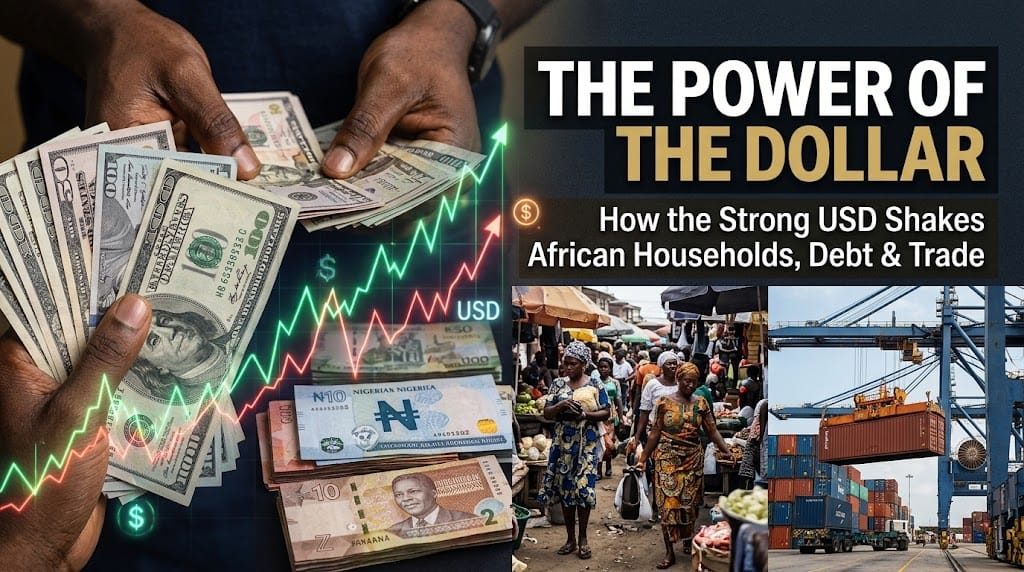
When the United States Federal Reserve adjusts borrowing costs or global investors seek safety, the consequences ripple quickly through foreign exchange trading desks in Lagos, Accra, Nairobi, and Johannesburg. The US dollar serves as the invoicing currency for the vast majority of global trade, from crude oil to wheat and industrial equipment. When the dollar holds a high valuation against major global peers, emerging and frontier economies absorb the strain almost immediately.
For African economies, an elevated dollar is not an abstract financial metric tracked on Wall Street. It translates into dearer bread in supermarket aisles, higher petrol costs at local pumps, and surging costs for governments paying back external loans. Across West, East, and Southern Africa, central banks have spent recent years managing historic depreciations against the greenback while attempting to tame double-digit domestic inflation.
The Engines Driving the US Dollar
The strength of the US currency rests on two main pillars: interest rate differentials and its status as the world's primary reserve asset. The Federal Reserve raised its benchmark interest rate aggressively to combat domestic inflation, lifting yields on US Treasury bonds to levels unseen in nearly two decades. When dollar-denominated assets yield four to five per cent with minimal default risk, global funds pull capital out of riskier frontier markets and park it in US government debt.
At the same time, persistent geopolitical friction in Europe and the Middle East has prompted fund managers to seek refuge in dollar cash equivalents. The United States also enjoys relative energy independence, exporting both oil and liquefied natural gas. Unlike energy-importing economies that must sell their home currencies to purchase hydrocarbons, the US trade balance benefits from elevated commodity prices. This baseline stability keeps buyers queuing for dollars in international markets.
How Exchange Rate Pressure Spreads Across Africa
A stronger dollar hurts emerging markets through three direct channels: imported inflation, foreign currency debt servicing, and foreign exchange reserve depletion. Because international trade contracts require dollar settlements, any depreciation of a domestic currency makes imports more expensive in local terms. Local traders must spend more domestic cash to secure the same volume of goods.
Also, sovereign governments across the continent issued billions of dollars in Eurobonds during the era of low global interest rates in the 2010s. When the dollar strengthens, the domestic tax revenue needed to service those interest payments expands, eating into budgets earmarked for public infrastructure, health, and schooling.
| Country | Currency | Main External Dollar Exposure | Primary Policy Response |
|---|---|---|---|
| Nigeria | Naira (NGN) | Refined fuel imports, machinery, foreign airline remittances | Rate hikes by the Central Bank of Nigeria, FX market unification |
| Ghana | Cedi (GHS) | External Eurobonds, food imports, industrial inputs | IMF balance of payments support, debt restructuring |
| Kenya | Kenyan Shilling (KES) | Eurobond maturities, petroleum, agricultural fertilisers | Central Bank of Kenya rate adjustments, diaspora bond issuance |
| South Africa | Rand (ZAR) | Global risk sentiment, manufactured goods, portfolio outflows | South African Reserve Bank inflation-targeting policy rates |
The Nigerian Naira: Free Floats and Fuel Import Costs
In Nigeria, Africa's most populous nation, the naira has experienced profound shifts since mid-2023. The Central Bank of Nigeria (CBN) removed long-standing currency pegs and multiple official exchange windows, allowing the naira to trade closer to open-market clearing rates. While the reform aimed to clear backlogs of trapped foreign earnings and attract international investors, it coincided with high global dollar strength.
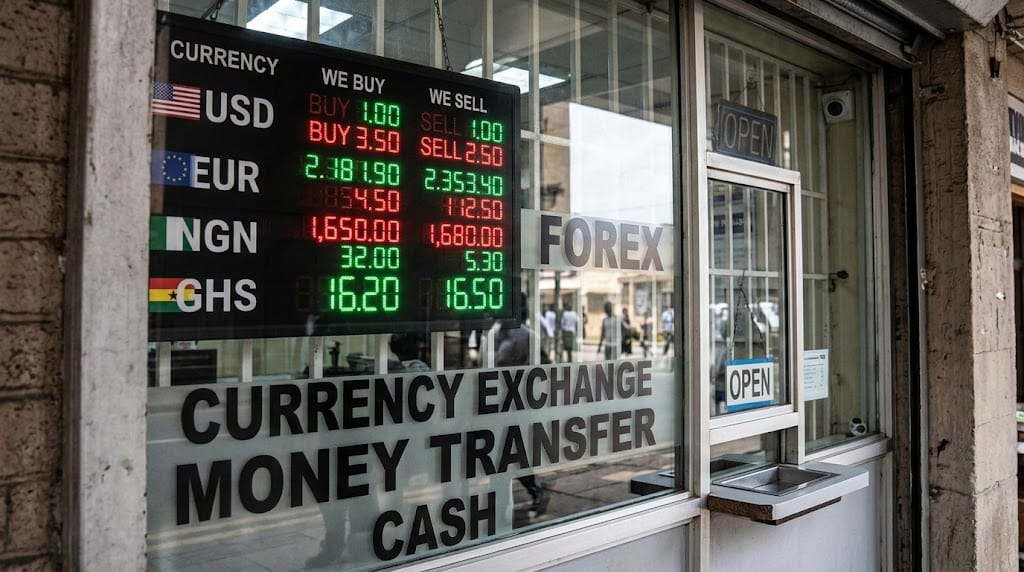
The resulting depreciation drove the official exchange rate past 1,500 naira per US dollar, down from roughly 460 naira per dollar before the float. Because Nigeria imports a significant portion of its refined petroleum, industrial inputs, and staple medicines, the currency's slide fed directly into domestic price levels. Headline inflation crossed 30 per cent, putting heavy downward pressure on household purchasing power. To restore balance, the CBN instituted back-to-back increases in its Monetary Policy Rate, lifting local interest rates past 26 per cent to encourage foreign portfolio inflows and domestic savings.
The Ghanaian Cedi: Restructuring Amid Commodity Shocks
Ghana faced severe fiscal distress when international capital markets locked the country out of commercial borrowing in 2022. The Ghanaian cedi suffered steep annual depreciations, falling past 15 cedis per US dollar during peak volatility. The government entered an Extended Credit Facility arrangement worth 3 billion US dollars with the International Monetary Fund (IMF) and carried out a comprehensive Domestic Debt Exchange Programme alongside bilateral debt talks.

A stronger greenback compounds Ghana's challenge because the state relies heavily on imports of refined petroleum and consumer items. Even as global gold and cocoa receipts brought in export revenues, payments for external debt and high shipping costs kept demand for dollars elevated. The Bank of Ghana kept its policy rate high to dampen demand for consumer credit and anchor market expectations, illustrating the persistent pressure African central banks face when international interest rates stay high.
The Kenyan Shilling: Managing Heavy Sovereign Maturities
In East Africa, the Kenyan shilling crossed historical thresholds against the dollar, driven by high global borrowing costs and heavy repayment schedules on international debt. Kenya faced a major hurdle in mid-2024 with the maturity of a 2 billion US dollar Eurobond issued a decade earlier. Fearing a potential default, foreign investors withdrew short-term funds, placing sustained downward pressure on the shilling.
Kenya managed to repay the bulk of the Eurobond through a combination of multilateral support and new debt issues, which provided relief to foreign exchange reserves. The shilling regained ground in mid-2024, yet long-term vulnerability remains. Kenya spends billions of dollars annually on imported crude, fertiliser, and industrial machinery. As long as global oil prices stay elevated and trade transactions clear in dollars, the Central Bank of Kenya must keep domestic rates sufficiently attractive to prevent capital flight.
The South African Rand: The Liquid Shock Absorber
South Africa possesses the continent's most liquid, freely traded currency. As a result, the South African rand often bears the brunt of global risk sentiment shifts. International institutional investors trade the rand as a proxy for broad emerging-market risk, selling the currency whenever US Treasury yields tick up or anxiety rises over international conflict.
The South African Reserve Bank (SARB) maintains a floating exchange rate regime and an explicit inflation target of three to six per cent. Unlike its peers in West Africa, the SARB rarely intervenes directly in currency markets to defend a specific exchange rate level. Instead, it uses interest rates to manage domestic inflation. When the dollar advances, the rand depreciates, pushing up the price of imported fuel. Domestic factors, including freight rail constraints and electricity shortages, compound the rand's volatility, even as mining exports of platinum and coal bring foreign exchange into the domestic system.
What Currency Depreciation Means for Everyday Budgets
For ordinary households and small business owners across the continent, exchange rate swings govern everyday living standards. Small manufacturing firms in Nairobi or retail merchants in Accra rely on imported spare parts, textiles, and packaging materials. When the dollar advances, these businesses face working capital deficits. A consignment of goods that cost 10,000 US dollars requires significantly more domestic currency to clear customs and transport from port facilities.
Diaspora remittances offer a partial cushion. Millions of Africans living in the United Kingdom, the United States, Canada, and Europe send money home to support relatives. In dollar terms, these transfers gain local buying power during currency drops. However, domestic inflation often catches up quickly, eroding the apparent windfall. Food costs, rent, and local transportation tariffs frequently rise to meet the new exchange rate reality within months.
Conclusion
The persistent strength of the US dollar exposes the vulnerability of economies that rely on primary commodity exports and imported finished goods. For Nigeria, Ghana, Kenya, and South Africa, defending domestic currencies requires fiscal discipline, high domestic borrowing rates, and structural shifts towards local manufacturing. Until trade accounts become less dependent on foreign imports and external sovereign debt burdens ease, movements in Washington and New York will continue to shape financial choices across the African continent.
Sources
- International Monetary Fund: World Economic Outlook
- Central Bank of Nigeria: Monetary Policy Communiques
- Bank of Ghana: Economic and Financial Data
- Central Bank of Kenya: Weekly Bulletins and FX Reports
- South African Reserve Bank: Monetary Policy Review
Disclaimer: This article provides general economic analysis and does not constitute financial, investment, or legal advice. Readers should consult a licensed financial advisor before making cross-border currency or investment decisions.
Category: Finance