No Credit History in Canada? How to Build a Good Credit Score in 12 Months
By Matthew Ayandare —

You may have run a business in Lagos, paid every bill on time and owned a car outright. In Canada, none of that shows up. Your credit history usually stays behind when you move, and you start again from zero.
That matters more than many newcomers expect. Landlords check credit before they rent. Car dealers and mortgage lenders use it to set your interest rate. Some employers look at it too. The good news is that a good score can be built within a year if you follow a simple plan.
How credit scores work in Canada
Canada has two credit bureaus, Equifax and TransUnion. Each keeps a file on you and turns it into a score between 300 and 900. Equifax describes a score between 660 and 900 as good.
Your score depends mainly on whether you pay on time, how much of your available credit you use, how long you have had credit, and how often you apply for new credit. Your income and savings do not count, which surprises many people. Lenders still look at your income when they decide how much to lend you, especially for a car loan or a mortgage, but the score itself ignores it.
It usually takes about six months of activity before a first score appears. So the sooner you start, the better.
| What affects your score | What helps | What hurts |
|---|---|---|
| Payment history | Paying every bill on or before the due date | Late or missed payments, accounts sent to collections |
| How much credit you use | Keeping balances below 30% of your limit | Running cards close to the limit |
| Length of history | Keeping your first card open for years | Closing old accounts |
| New applications | Applying only when you need credit | Many applications in a short time |
Your 12-month plan
| When | Step |
|---|---|
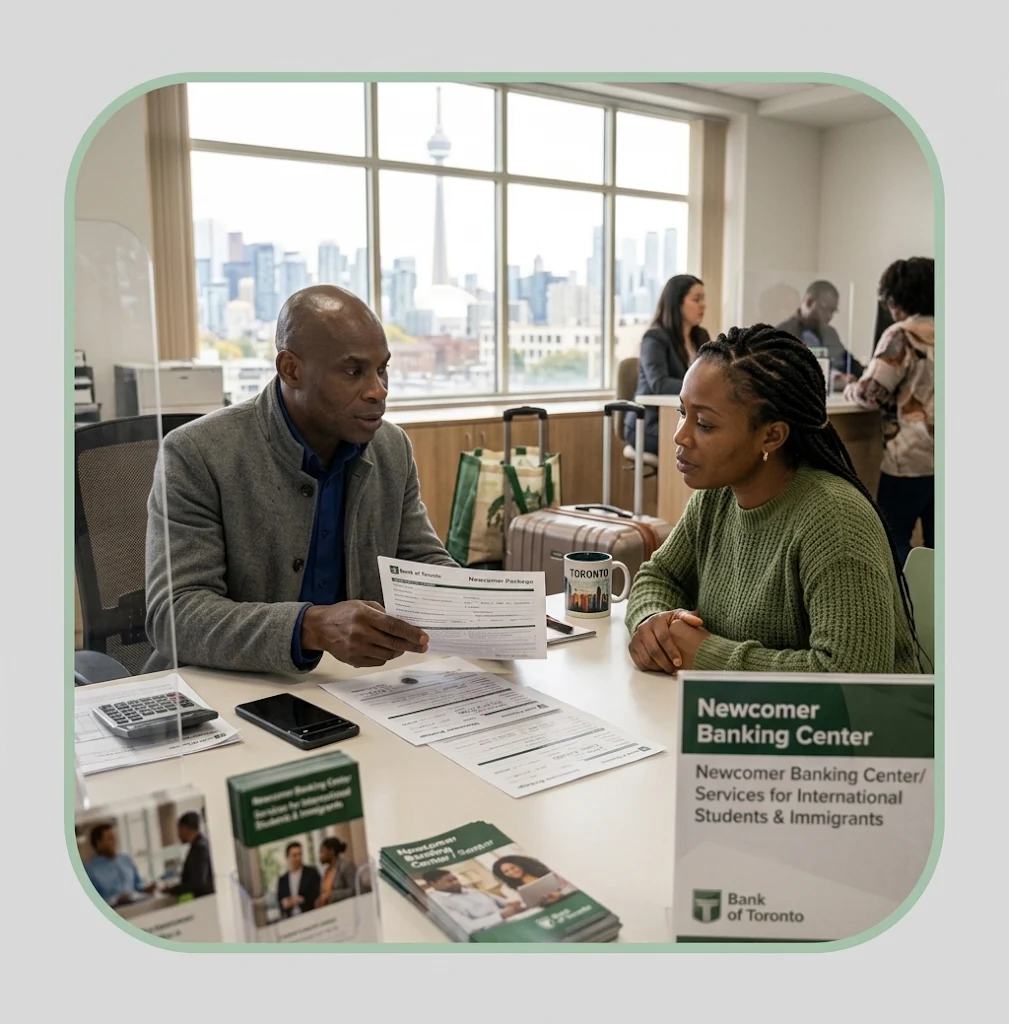
| Month 1 | Open a bank account with a newcomer package. Ask for a newcomer credit card that needs no credit history. If you are refused, get a secured card. |
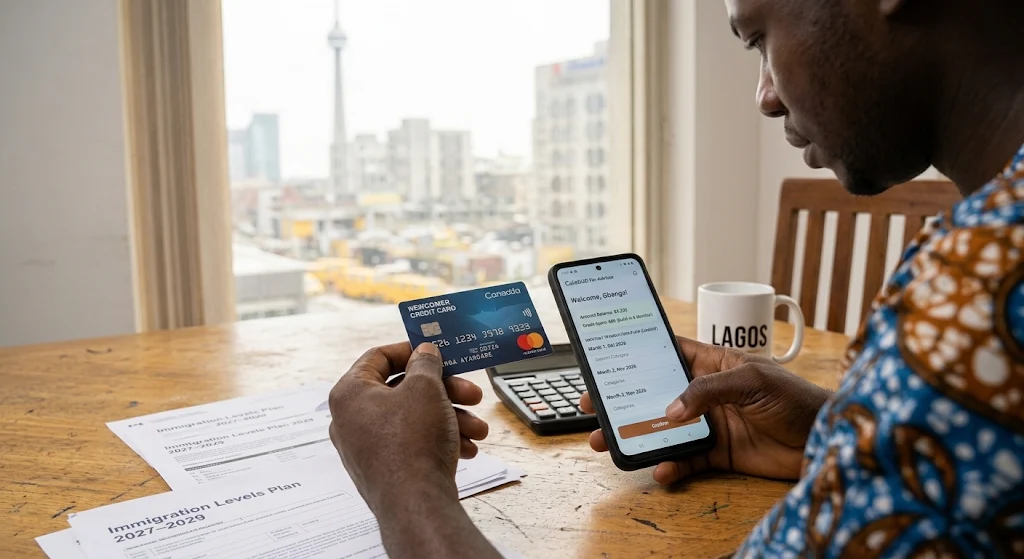
| Months 1 to 6 | Put one or two small regular bills on the card, such as your phone plan or transport. Pay the full balance every month, before the due date. |
| Month 6 | Check your score free with Equifax or TransUnion, or through your bank's app. Checking your own score does not lower it. |
| Months 6 to 9 | If the score is building well, ask your bank to raise your limit, or to move you from a secured card to a regular card. |
| Months 9 to 12 | Keep balances under 30% of your limits. Add a second card only if you need it. Avoid store cards and payday loans. |
Secured cards explained
A secured card works like a normal credit card, but you give the bank a deposit first, often a few hundred dollars. That deposit becomes your credit limit. The bank reports your payments to the credit bureaus, so the card builds your history just like any other. After six to twelve months of on-time payments, many banks return the deposit and move you to a regular card.
Mistakes that set newcomers back
Paying only the minimum each month. You build history, but you also pay interest of around 20 per cent a year or more on most cards. Pay in full.
Using most of your limit. With a $500 limit, a $400 balance looks risky even if you pay it off. Keep the balance under $150.
Applying for several cards in your first weeks. Each application can show on your file and lower your score.
Ignoring small bills. An unpaid phone bill or parking fine sent to a collection agency can damage your score for years.
Co-signing a loan for a friend. If they miss payments, it lands on your file.
Other ways to help
Some rent payment services can report your rent to a credit bureau. If your landlord or the service offers this, it can add a second source of on-time payments. Ask before you sign up, and check any fees.
Five questions and answers
1. Does my Nigerian credit history count in Canada?
Usually not. Canadian bureaus keep their own records, so most newcomers start with no file.
2. How long until I have a credit score?
About six months after your first credit account is reported. A strong history takes longer to build.
3. Does checking my own score lower it?
No. Checking your own score is a soft check. Only applications for credit, known as hard checks, can affect it.
4. What is a good score in Canada?
Equifax treats 660 to 900 as good. Higher scores bring lower interest rates on car loans and mortgages.
5. Should I get a secured card or a newcomer card?
Try your bank's newcomer card first, as it needs no deposit. If you are refused, a secured card is a reliable fallback.
Conclusion
Building credit in Canada is slow at first, but it is not complicated. Get one card, use a little of it, pay it in full every month and keep it open. Within a year you can have a score that helps you rent, buy a car and, in time, qualify for a mortgage.
Disclaimer: This article is general information, not financial advice. Credit products, fees and rules vary. Check terms with your bank before applying.
Category: Finance