Nigeria's New Tax Rules Explained: What Changes on Your Salary in 2026
By Gbenga Ayandare —
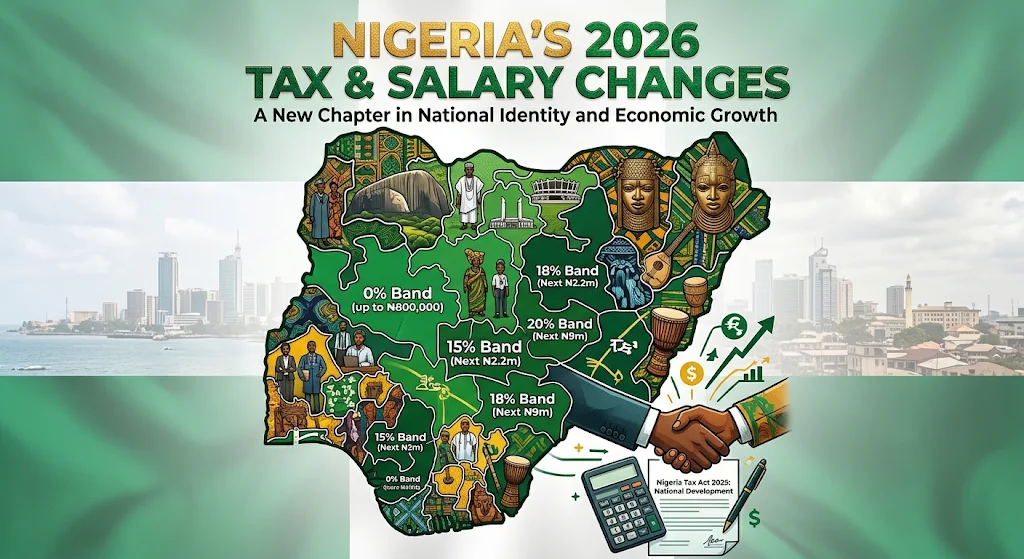
If you earn a salary in Nigeria, the tax on your payslip is now worked out under a new law. The Nigeria Tax Act 2025, signed by President Bola Tinubu on 26 June 2025, took effect on 1 January 2026. It replaces the old personal income tax rules with new bands, a larger tax-free amount and a clearer list of reliefs.
For most low and middle earners, the result is less tax. Higher earners pay a top rate of 25 per cent, up from 24 per cent. This guide explains what changed, shows the new bands and works through three real salaries so you can check your own payslip.

What changed on 1 January 2026
Three changes matter most to salary earners.
First, the first ₦800,000 of taxable income each year is now tax-free. Anyone whose taxable income stays at or below that amount pays no personal income tax at all.
Second, income above ₦800,000 is taxed in new bands, from 15 per cent up to 25 per cent. You pay each rate only on the slice of income inside that band, not on your whole salary.
Third, the reliefs you can deduct before tax are now listed one by one. They include your pension contributions, National Housing Fund (NHF) and health insurance contributions, life insurance premiums, interest on a mortgage for the home you live in, and a new rent relief.
The law also created the Nigeria Revenue Service, which takes over from the Federal Inland Revenue Service. Employers still deduct the tax each month through PAYE, so most workers do not need to file anything themselves.
The new tax bands
| Slice of annual taxable income | Rate | Maximum tax on this slice |
|---|---|---|
| First ₦800,000 | 0% | ₦0 |
| Next ₦2,200,000 (up to ₦3m) | 15% | ₦330,000 |
| Next ₦9,000,000 (up to ₦12m) | 18% | ₦1,620,000 |
| Next ₦13,000,000 (up to ₦25m) | 21% | ₦2,730,000 |
| Next ₦25,000,000 (up to ₦50m) | 23% | ₦5,750,000 |
| Above ₦50,000,000 | 25% | 25% of the rest |
The new rent relief
If you rent your home, you can deduct 20 per cent of your annual rent from your taxable income, up to a maximum of ₦500,000. Someone paying ₦1.2 million a year in rent can deduct ₦240,000. Anyone paying ₦2.5 million or more reaches the ₦500,000 cap.
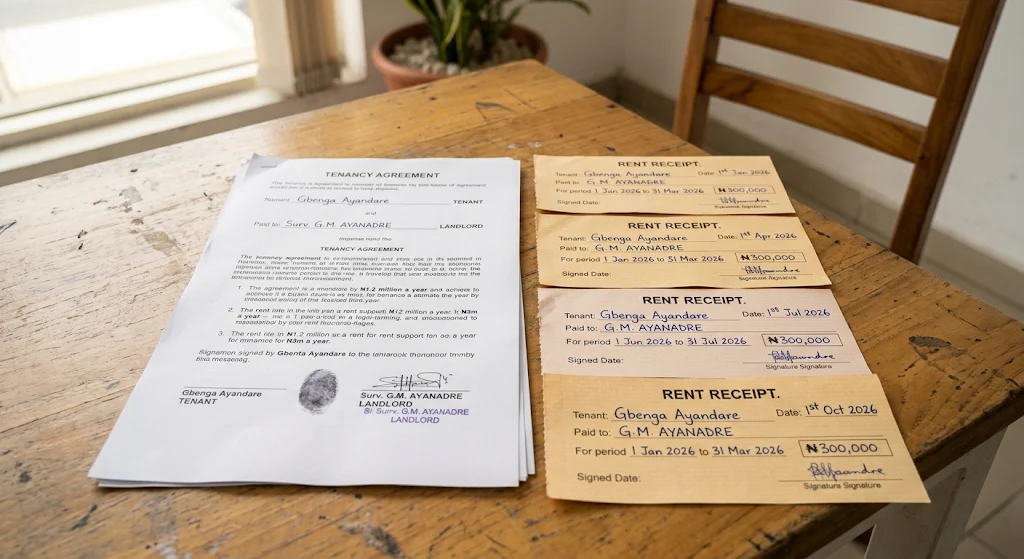
The relief is not automatic. You must declare the rent you pay, and the tax authority can ask for proof, so keep your tenancy agreement and payment receipts. Tell your employer's payroll team, because they apply reliefs when they work out your monthly tax.
Three worked examples
The examples below assume an 8 per cent pension contribution and, where stated, the rent relief. They leave out NHF and other deductions to keep the sums simple, so your own figure may be a little lower.
| Annual gross salary | Pension (8%) | Rent relief | Taxable income | Tax per year | Tax per month | Share of gross |
|---|---|---|---|---|---|---|
| ₦1,200,000 (₦100,000 a month) | ₦96,000 | None | ₦1,104,000 | ₦45,600 | ₦3,800 | 3.8% |
| ₦6,000,000 (₦500,000 a month) | ₦480,000 | ₦240,000 (rent ₦1.2m) | ₦5,280,000 | ₦740,400 | ₦61,700 | 12.3% |
| ₦18,000,000 (₦1.5m a month) | ₦1,440,000 | ₦500,000 (rent ₦3m) | ₦16,060,000 | ₦2,802,600 | ₦233,550 | 15.6% |
Take the middle example. After pension and rent relief, taxable income is ₦5,280,000. The first ₦800,000 is tax-free. The next ₦2,200,000 is taxed at 15 per cent, which is ₦330,000. The remaining ₦2,280,000 is taxed at 18 per cent, which is ₦410,400. The total is ₦740,400 a year.
Even at ₦18 million a year, tax takes about one naira in every six. The top rate of 25 per cent only applies to income above ₦50 million.
What to do now
Start with your January 2026 payslip, or any payslip since. Check that the tax line has changed, and use the bands above to see whether the figure looks right.
If you rent, give your employer a copy of your tenancy agreement so the rent relief is applied. If your landlord only gives handwritten notes, ask for a written tenancy agreement and receipts that show the amount, the dates and both your names. If you pay into a life insurance policy or have a mortgage on your own home, tell payroll about those too. Many workers miss reliefs simply because nobody told the payroll team.
If you also earn money outside your job, from a business, rent or freelance work, that income is taxed as well. You may need to file a return yourself, so speak to a tax adviser or your state's tax office.

Five questions and answers
1. I earn the minimum wage. Do I pay tax?
If your taxable income for the year is ₦800,000 or less, you pay no personal income tax under the new law.
2. Is the whole of my salary taxed at my top rate?
No. Each rate applies only to the slice of income inside its band. Moving into a higher band only affects the naira above that line.
3. Can I claim rent relief if I share a flat?
You can claim on the rent you actually pay and can prove. Keep receipts in your own name or a written agreement showing your share.
4. Do I need to file a tax return if I only have one job?
Usually not. Your employer deducts tax through PAYE. Check your payslip, and keep records in case you are asked.
5. Who collects the tax now?
The Nigeria Revenue Service has replaced the Federal Inland Revenue Service. State tax offices still handle PAYE for most workers.
Conclusion
The 2026 tax law means less tax for most people on low and middle salaries, a slightly higher top rate for the best paid, and a rent relief worth up to ₦500,000 a year. The single most useful thing you can do is check your payslip against the bands above and make sure payroll knows about your rent, pension, insurance and mortgage. A few minutes now can save you money every month.
Disclaimer: This article is general information, not tax or financial advice. Your tax depends on your full circumstances. Speak to a qualified tax adviser before making decisions.
Category: Finance