Naira Holds Near ₦1,350 to the Dollar: What It Means for December Prices
By Victoria Odunola —

Nigeria's currency has found firmer footing heading into the final stretch of the year. In the official window at the Nigerian Foreign Exchange Market (NFEM), the naira trades at approximately ₦1,350 to the US dollar, with street dealers quoting between ₦1,411 and ₦1,419. Compared with the intense currency turbulence experienced across earlier quarters, this relative calm offers relief to corporate treasurers and importers. For households preparing for year-end festivities, however, currency stability does not guarantee cheaper groceries, clothes, or travel tickets.
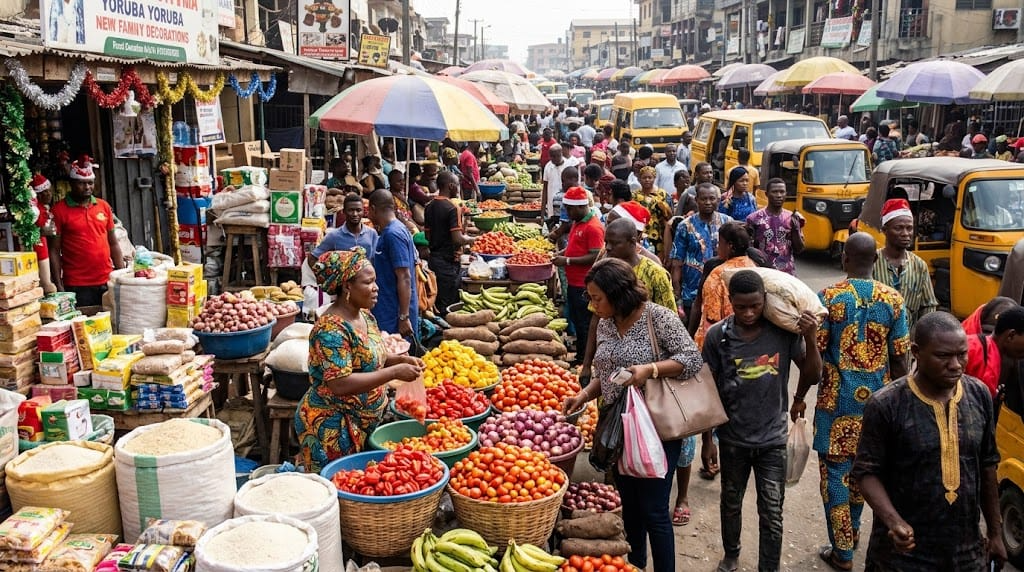
December always drives the heaviest shopping volume of the calendar year in Nigeria. Known colloquially as the festive season or "Detty December", the period brings family reunions, weddings, community festivals, and an influx of visitors from abroad. Because Nigeria relies heavily on imported consumer goods, vehicle parts, and food processing ingredients, the exchange rate directly influences shelf prices. Understanding why prices stay firm despite currency calm requires examining import timelines, local operating expenses, and seasonal supply crunches.
The Timing Gap Between Import Orders and Retail Shelves
Retail inventories arriving in stores for December shopping did not cross the border at today's exchange rates. Most large importers, wholesalers, and supermarket distributors place overseas purchase orders three to four months in advance. Goods sold during late November and December were booked and paid for between July and September.
During that procurement window, businesses faced varying foreign currency quotations, bank processing fees, and letters of credit opened at differing valuations. Importers must recover the capital spent when the shipments left factories in Europe, Asia, or the United States. If an electronics merchant secured inventory when the dollar commanded a higher premium, or when credit costs were unusually steep, that inventory carries a stubborn cost base that retail discounts cannot easily erase.
Clearing imported freight at Lagos ports—chiefly Apapa and Tin Can Island—adds another layer of cost. The Nigeria Customs Service calculates import duties using an official customs foreign exchange rate directed by the Central Bank of Nigeria (CBN). Even as the spot rate steadies around ₦1,350, port charges, terminal handling fees, demurrage, and haulage surcharges remain elevated. Importers pass these cumulative logistics expenses straight to final consumers.
Downward Price Rigidity in Local Markets
In standard economic theory, currency appreciation or stability should slow retail price increases and perhaps lower prices on imported merchandise. In everyday commerce, prices exhibit what economists call downward rigidity, or "sticky prices". When the naira weakens, traders adjust prices upwards almost instantly to protect their working capital against currency loss. When the naira stabilises or firms up, merchants lower prices far more slowly, if at all.
Traders operate on replacement cost rather than purchase cost. A distributor selling a carton of frozen fish or a bag of imported rice must ensure the revenue from today's sale generates enough local currency to purchase the next consignment from the manufacturer. Until traders feel confident that currency stability will endure well into the coming year, they hold prices firm as a buffer against unexpected currency drops.
Non-currency operational expenses reinforce this price stickiness. Running retail shops, cold storage facilities, and warehouses requires reliable electricity. With frequent grid disruptions, businesses run heavy diesel generators. The pump price of diesel and premium motor spirit (petrol) directly dictates transport and power budgets across wholesale hubs such as Alaba International Market in Lagos or Onitsha Main Market in Anambra State. These domestic overheads hold retail markups high regardless of foreign exchange movements.
Seasonal Food Demand and Domestic Transport Costs
Food constitutes the largest share of household expenditure across Nigeria. Even when foreign exchange pressures ease, domestic supply chains face distinct pressures in November and December. Farm harvests for certain grains wind down, while consumer demand for festive staples surges across the country.
The price of popular staples—such as live chickens, goats, vegetable cooking oil, fresh tomatoes, onions, and parboiled rice—responds to transport costs more than to foreign currency valuations. Long-haul trucks carrying agricultural produce from northern farming belts to southern urban centres pay heavy fuel bills, interstate transit levies, and vehicle maintenance costs. These transport overheads compound as December approaches, because truck operators raise their freight charges in line with holiday road congestion and seasonal fuel station markups.
Locally grown food is insulated from the direct exchange rate, yet farmers face indirect costs. Fertiliser, packaging materials, mechanical spares for tractors, and veterinary drugs all contain imported components. Past currency devaluations raised input prices for agricultural producers earlier in the planting cycle, and those elevated costs continue to reflect in current wholesale farm-gate prices.
How the Steady Rate Affects Diaspora Remittances
The final weeks of the year see millions of dollars flowing into Nigeria from citizens living in the United Kingdom, the United States, Canada, and across continental Europe. Relatives at home depend on these transfers to settle medical bills, fund family gatherings, build homes, and buy holiday food.
A steady official exchange rate near ₦1,350 reshapes the purchasing power of these transfers. When the naira tumbled past ₦1,600 per dollar in earlier periods, recipients received an immediate cash windfall in local currency for every foreign transfer. At ₦1,350 to the dollar, a transfer of $500 converts to ₦675,000, compared with over ₦800,000 during past troughs.
Because domestic market prices have not retreated from their earlier highs, households relying on remittances find their naira allocations do not stretch as far as they expected. Senders abroad often find themselves asked to transfer larger foreign sums to cover the same family living costs, forcing households on both sides of the Atlantic to rebalance their holiday budgets.
Cost Pressures Across Key Festive Spending Sectors
Different spending categories react differently to exchange rate movements. The table below outlines how currency stability interacts with local operating conditions across major year-end consumer sectors.
| Spending Category | Foreign Exchange Exposure | Primary Non-FX Cost Factors | Expected December Price Movement |
|---|---|---|---|
| Imported Consumer Electronics | Very High | Port clearing charges, showroom rents, generator fuel | Moderate plateauing; promotional discounts on older models |
| Staple Holiday Food Items | Moderate | Interstate haulage fees, seasonal demand, farm inputs | Upward drift driven by supply shortages and transport rates |
| Interstate Road Travel | Low | Commercial petrol prices, spare parts, seasonal passenger queues | Sharp holiday increases due to vehicle shortages and toll fees |
| Imported Apparel and Footwear | High | Air cargo freight rates, market stall rents, customs duties | Firm prices; sellers preserve margins to cover slower off-peak sales |
| Domestic and Regional Air Travel | High | Aviation fuel (Jet A-1), aircraft lease costs, landing tariffs | Substantial increases as seat supply fails to meet peak holiday booking demand |
Inventory Strategy for Retailers and Corporate Buyers
For corporate purchasing departments and formal retail chains, a predictable exchange rate eliminates the panic buying that defined previous quarters. In periods of rapid currency slide, business managers rushed to convert naira balances into physical goods immediately, fearing their money would lose substantial purchasing power within weeks.
The relative stability around ₦1,350 allows purchasing managers to space out replenishment orders and negotiate terms with suppliers. Wholesalers can price items with greater certainty instead of inflating sticker prices with defensive currency-risk margins. This predictability helps corporate buyers manage balance sheets, avoid speculative inventory buildup, and plan cash requirements into the first quarter of the new year.
Consumers benefit from this environment not through sudden price cuts, but through the absence of daily price shocks. When currencies experience wild fluctuations, supermarket staff spend hours updating price labels every few days. A settled rate slows that churn, enabling households to draft holiday budgets without seeing their estimates shattered overnight.
Conclusion
The naira holding steady near ₦1,350 to the dollar provides much-needed calm for Nigerian commerce, but it will not create cheap shopping baskets this December. Prices built upon months of high import bills, elevated fuel rates, and costly port clearance remain sticky. Combined with traditional festive demand spikes and transport surcharges, consumers should anticipate stable to slightly higher prices across retail markets rather than widespread discounts.
Sources
- Vanguard News: Nigerian Foreign Exchange Market Reports
- Central Bank of Nigeria: Financial Markets and Exchange Rate Data
- National Bureau of Statistics: Consumer Price Index and Inflation Reports
Disclaimer: This article provides general financial analysis and reporting on economic trends; it does not constitute financial, investment, or commercial advice. Readers should consult qualified financial professionals or licensed advisers before making substantial foreign currency or business procurement decisions.
Category: Finance